Google 将 Gemini 的 Personal Intelligence 引入 Android Auto 与 Google Built-in
Google 正在将 Gemini 的 Personal Intelligence 功能引入 Android Auto 与 Google Built-in,该功能已于今日在 Android Auto 开始推出,并将在未来几个月内登陆内置 Google 软件的车机系统。这项可由用户选择开启的功能允许 AI 调用用户的更多数据以优化回答。
Manage your consent preferences
If you are a resident of Colorado, Connecticut, Virginia, Utah, Oregon, Texas, Montana, Delaware, Iowa, Nebraska, New Hampshire, and New Jersey, Tennessee, Minnesota, Maryland, Indiana, Kentucky, or Rhode Island you have the right to opt-out of Targeted Advertising, including our “sale” and/or “sharing” of your Personal Information (“Opt-Out”). We and our third-party business partners use Personal Information in accordance with our Privacy Policy to serve advertising believed to be of interest to you (“Targeted Advertising”). If you are a California resident, you also have the right to limit the use and disclosure of your Sensitive Personal information in particular circumstances. Please note that you may need to Opt-Out on each website, mobile app, browser, and device you use, and if you clear your browser cookies, you may need to repeat this process. However, if you have created an account to log in across several of our websites and/or mobile apps, we will make reasonable efforts to apply your Opt-Out request to each of those websites and apps. ◦ To Opt-Out of Targeted Advertising on this site: Move the “Allow Targeted Advertising" toggle below to the left and press “Confirm My Choices”◦ To Opt-Out of other “sales”, including for list rentals, data co-ops, and to limit the use and disclosure of your Sensitive Personal Information: Please email privacy_administration@condenast.com or call 1-877-241-4999.
Essential
- On
These cookies are necessary for the website to function and cannot be switched off in our systems. They are usually only set in response to actions made by you which amount to a request for services, such as setting your privacy preferences, logging in or filling in forms. You can set your browser to block or alert you about these cookies, but some parts of the site will not then work. These cookies do not store any personally identifiable information.
Performance
- On
These cookies allow us to count visits and traffic sources so we can measure and improve the performance of our site. They help us to know which pages are the most and least popular and see how visitors move around the site. All information these cookies collect is aggregated and therefore anonymous. If you do not allow these cookies we will not know when you have visited our site, and will not be able to monitor its performance.
Audience Measurement
- On
We use audience measurement cookies in order to carry out aggregated traffic measurement and generate performance statistics essential for the proper functioning of the site and the provision of its content (for example to measure performance, to detect navigation problems, to optimization technical performance or ergonomics, to estimate server power needed and to analyse content performance). The use of these cookies is strictly limited to measuring the site's audience. These cookies do not allow the tracking of navigation on other websites and the data collected is not combined or shared with third parties. You can refuse the use of this cookie by switching off the slider to the right.
Functional
- On
This website uses functional cookies and services to remember your preferences and choices, such as language preferences, font sizes, region selections, and customized layouts. They enable this website to offer enhanced and personalized functionalities.
Social Media
- Off
These cookies are set by a range of social media services that we have added to the site to enable you to share our content with your friends and networks. They are capable of tracking your browser across other sites and building up a profile of your interests. This may impact the content and messages you see on other websites you visit. If you do not allow these cookies you may not be able to use or see these sharing tools.
Allow Sale/Targeted Advertising?
- On
We may transfer or share your personal information to third parties for the purposes of targeted advertising. You can learn more about what information is used for this purpose in our privacy notice.
Confirm My Choices Reject All Accept All
Skip to contentArs Technica home
Sections
Story text
Size Width * Links
- Subscribers only
Learn more
Pin to story
Theme
- HyperLight
- Day & Night
- Dark
- System
Sign In
Sign in dialog...
Sign in
Personalized vroom
Gemini’s Personal Intelligence is coming to cars
It’s probably time to audit your Gemini settings.
Ryan Whitwam – Oct 20, 2026 8:00 PM|9
Credit: Google
Credit: Google
Text settings
Story text
Size Width * Links
- Subscribers only
Learn more
Minimize to nav
Google kicked off 2026 with the addition of Personal Intelligence to Gemini, allowing its AI to pull in more of your data to formulate answers. It started as a paid feature but eventually came to all Gemini users. However, this feature wasn’t available in the car until now. Google is rolling out Personal Intelligence to Android Auto and Google Built-in, and it is still, thankfully, an optional feature.
As Google points out, a generative AI’s outputs are better “when it knows the world and knows you,” which is correct in an uncomfortable sort of way. The more context you can provide to a model, the better the output will be at the end of the token shuffle. Since Google has so much of your data already, it sees Personal Intelligence as a differentiator versus other AI systems. You don’t have to provide the AI context because it already has it from apps like Gmail and Calendar.
Personal Intelligence is beginning its rollout in Android Auto today, and it will come to vehicles with Google built-in in the next few months. As an aside, “Google built-in” is questionable branding, but it refers to cars that run Google software in the infotainment system rather than projecting an interface from your phone. Very few vehicles have Google built-in, but Google often releases new car features on them first. This time, it’s the other way around.
Ars Video
How The Callisto Protocol's Gameplay Was Perfected Months Before Release
Google says Personal Intelligence is a natural fit for the car, allowing you to focus on the road instead of providing detailed instructions to your digital assistant. For example, you can say “take me to my doctor’s appointment,” and Gemini can get that data from your connected calendar. It can also leverage visual analysis to find locations in your photos to begin navigation.
Personal Intelligence is off by default, but it’s possible you’ve turned it on at some point while interacting with Gemini, which has now replaced Assistant on all devices. Google has a habit of nudging users to opt in to data sharing in Gemini, so you may not even realize you’re sharing account data with Gemini, and those settings will transfer over to Android Auto. It’s unclear if Google built-in vehicles will have their own settings interface for Personal Intelligence. We’ve asked Google and will update if we hear back.
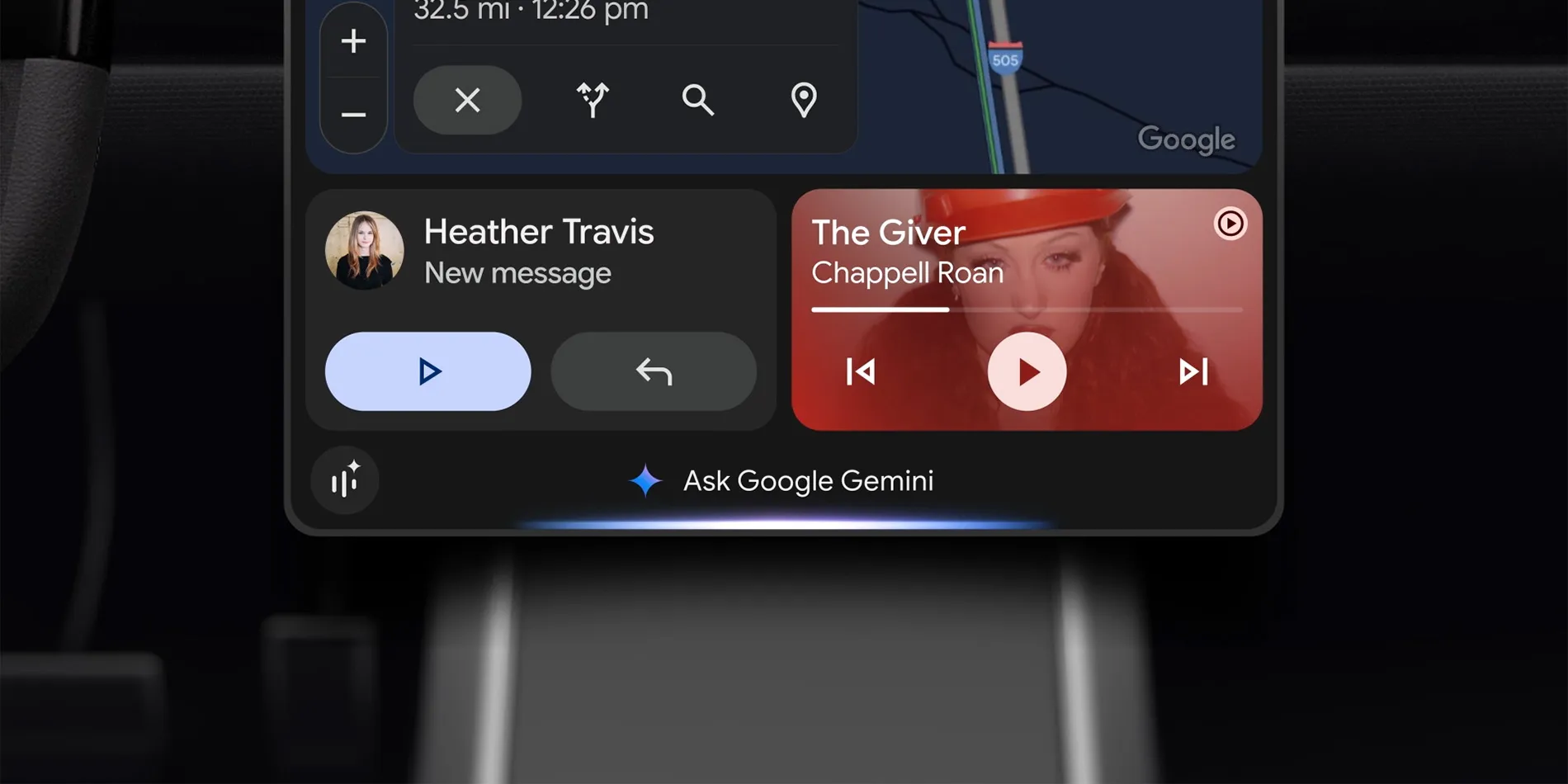
Gemini Personal Intelligence in cars.
There may be other people interacting with the screen in your car, so perhaps you don’t want more of your account data informing replies. The Personal Intelligence options are just one level deep in the Gemini app’s settings. You’re looking for the “Connected Apps” section, where you can toggle Workspace (Gmail, Calendar, etc.), Search, Photos, and more.
While Google says it doesn’t use your personal data to train Gemini, it does use your inputs and outputs while using the AI. Some of those outputs can have personal information when you have these services connected, and while the company does attempt to filter that out, it won’t make any promises. The rollout of Personal Intelligence in your car is probably a good opportunity to check your data-sharing settings and make sure you’re comfortable with them.
Ryan WhitwamSenior Technology Reporter
Ryan WhitwamSenior Technology Reporter
Ryan Whitwam is a senior technology reporter at Ars Technica, covering the ways Google, AI, and mobile technology continue to change the world. Over his 20-year career, he's written for Android Police, ExtremeTech, Wirecutter, NY Times, and more. He has reviewed more phones than most people will ever own. You can follow him on Bluesky, where you will see photos of his dozens of mechanical keyboards.
Comments
Loading comments...
Most Read
1.ReactOS reaches major milestone with NTFS install support
- 2.Visiting Slate’s first showroom as its $25,000 electric truck nears production
- 3.A Chinese rocket deorbited over Minnesota and left this in a farmer's cornfield
- 4.Pennsylvania issues alert on congenital measles—something US hasn't seen for decades
- 5.Stratospheric airship flew from US to Japan to test sky cell tower concept
Customize
Ars Technica has been separating the signal from the noise for over 25 years. With our unique combination of technical savvy and wide-ranging interest in the technological arts and sciences, Ars is the trusted source in a sea of information. After all, you don’t need to know everything, only what’s important.
More from Ars
Contact
Manage Preferences
© 2026 Condé Nast. All rights reserved. Use of and/or registration on any portion of this site constitutes acceptance of our User Agreement and Privacy Policy and Cookie Statement and Ars Technica Addendum and Your California Privacy Rights. Ars Technica may earn compensation on sales from links on this site. Read our affiliate link policy. The material on this site may not be reproduced, distributed, transmitted, cached or otherwise used, except with the prior written permission of Condé Nast. Ad Choices
Sign in dialog...
Sign in
来源:Ars Technica:AI · arstechnica.com